Private: Havana Heyday
Havana, legendary capital of gangsters, gambling and girls; magnet for the rich and famous in the 30’s and 40’s where Lucky Luciano held court on the wide verandah of the Hotel National – a mere 3 hours from the east coast. Burnt into our collective memory by Cuba’s almost native-son, Ernest Hemingway who may have captured it all when he noted “in terms of beauty, only Venice and Paris surpass Havana”.
Protected today by UNESCO the old city is a warren of grand Spanish colonial buildings, ancient plazas and “wedding cake” churches. Cobblestoned streets with balconied houses line dozens of streets and weathered wooden shutters keep out the sun. A sense of perfect decay, buildings speaking of a past that was much more interesting than picket fences. Everywhere people living, laundry on wrought-iron balconies, afro-Cuban music coming from somewhere, sidewalk pastry vendors and men in cafes with glasses of golden rum and coffee. We are whisked to the roof of a penthouse overlooking the malecon where waves crash against the seawall. Lunch to the sounds of a perfect rendition of “Diana” – our first of many mojitos and cigars. Sunset on the pool deck high above the city and at late night walk through Cathedral Square to Hemingway’s Bodeguita – people wander in from the street and join in the music. We buy mojitos all round just to keep them singing – they don’t need much encouragement.
Thighs & Cigars
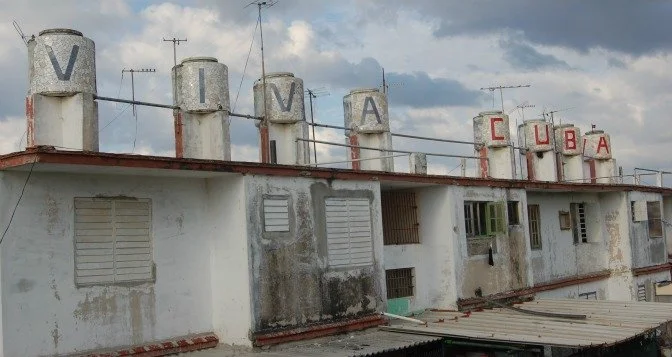
Viva Cuba! You thought you knew a good cigar … little known and somewhat interesting facts about cigars … the word cigar comes from the indigenous Cuban word “sikar” loosely translated as “the act of smoking”; the word “cohiba” is the indigenous name for the shell used to hold tobacco leaves when they were smoked;
Cigars should not be lit with anything other than a cedar splint (lighters give off fumes);
You should never tap the ash off the end of the cigar – apparently it draws better when there is a lot of ash;
The larger the diameter of the cigar the milder the taste (ladies do not smoke the little thin ones – they are the strongest);
The recipe for Cohibas was “cooked-up” by a worker in a cigar factory who made them for his own enjoyment (all workers are allowed to take home 3 cigars a day) – his boss asked For one of his cigars one day and the rest is expensive cigar history;
There are 64 shades of brown by which cigars are colour graded and colour has no influence on flavour whatsoever; banding of cigars is only done by women;
Cigar boxes in Cuba all come from Canada; and we could not find any cigars that were rolled on thighs…
Make Me a Cohiba
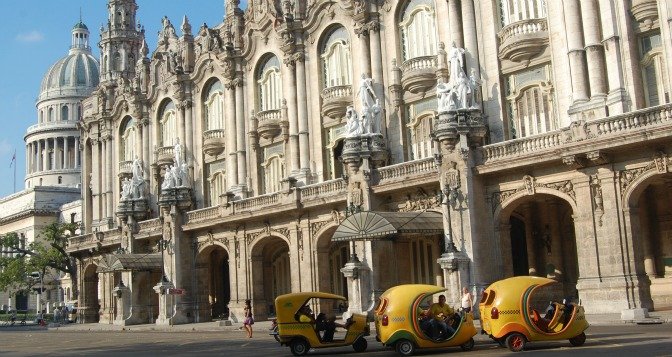
Coco taxi. Most fascinating visit to Partagas Cigar factory which ironically sits right beside the Capitol Building. 600 workers on 5 floors perform the 9 steps required for the perfect cigar. All brands made here to their own distinct recipe – Cohibas, Monte Cristos, Partagas, Bolivar and Romeo y Julieta.
Tobacco arrives in bales from countryside, “Cuban Black” tobacco, all natural and air dried. It is graded according to colour, the “wrapper” is perfect; stripped of leaf veins and ironed flat with wet hands. Leaves are put into “recipe” bundles and then given to cigar makers who know what they are making – be it a Monte Cristo # 4 or a big-daddy Cohiba. Each cigar maker has undergone 9-12 months of training – only 35% pass the grade. The cigar makers all in one room at long wooden tables, room is hot, windows thrown wide open. Each one makes 80-120 cigars per day all of which are attributed to their “number” – random and stringent testing rejects 5-8% of all cigars made. In the front, centre of room an impressive wooden table where sits the “reader”. The most important and most respected man in the building. He reads to the rollers – the newspaper in the morning and then a novel or poetry in the afternoon – the only sound the clipping of cigars, or the rustle of tobacco leaves. Monte Cristo cigars got their name from this ritual – the yet un-named cigars were being made whilst the Count of Monte Cristo was being read … In the back rooms the completion – banding, boxing, sealing and putting to rest in giant humidors before export.
Cuba Libre & Hemingways
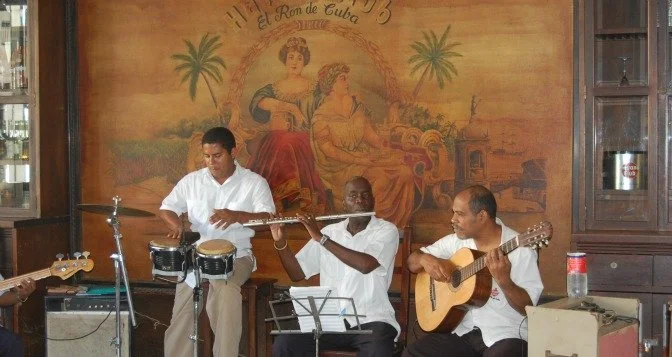
Rum Museum tunes. Before I went to Cuba I thought this was a battle cry of sorts, sort of like “viva la revolution” or Obama’s election chant of “yes we can.” Very shortly, minutes in fact, after arrival, I realized it is in fact the national drink, a thing of legend, never to be refused and never to be preceded by the words “it’s a little early don’t you think”. Cubans revere their rum and no place better to see this than at the “Fundacion Havana Club”, the cathedral of rum. Our guide, the body double of a ‘70’s Mod Squad girl (male friend Chris again mesmerized); waltzes us through the process from cane harvest to the final product all the while backed by afro-Cuban jazz from the bar in the lobby. It is 10 am and we are learning to mix and drink mojitos … Hemingway would have been proud.
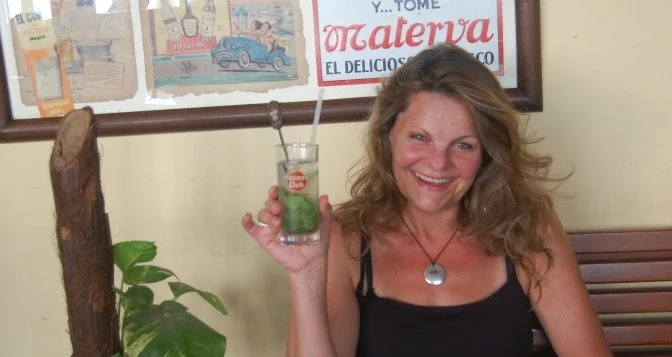
10 am mojito
By all accounts Hemingway was a great drinker – his drink of choice was Cuban rum – in a mojito or a daiquiri. The daiquiri was reported invented in Havana at one his favourite haunts “La Floridita” just down the street from the fabulously pink façade of Hotel Ambos Mundo where he lived for seven years.
One can spend an entire trip to Cuba just visiting places Hemingway lived and drank … we gave it a good shot and even ventured out one day to Cojimar, the fishing village close to where he lived and was inspired to write The Old Man and the Sea. Beside La Terraza where Hemingway dined at the corner table, we visit with the son of Raul Corrales, Fidel’s revolutionary photographer who travelled with him and Che Guevara – capturing Che in the famous black and white images women still swoon over.
Buena Vista Dancing
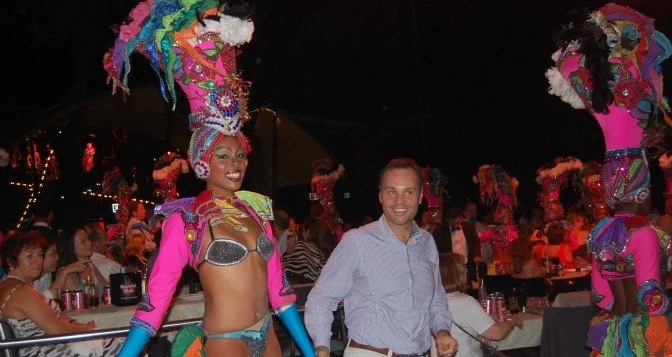
Music and cigars compete with rum for top spot. Our lunch at the Hotel Conde Villeanueva hosted by “Romeo y Julieta” cigars is accompanied by Amadito Valdez, drummer from the Buena Vista Social Club who regales with stories and a quest for a gig in North America. He plays a few songs for us, sips the golden nectar and a thick coffee. We wander off through streets and come upon a handball court, very competitive and they won’t let us play. Everywhere the most fascinating architecture – neo-classic courtyards and crumbling arcades, beside Spanish colonial indulgences, colourful Moorish tiled interiors and baroque cathedrals.
Cuba Notes
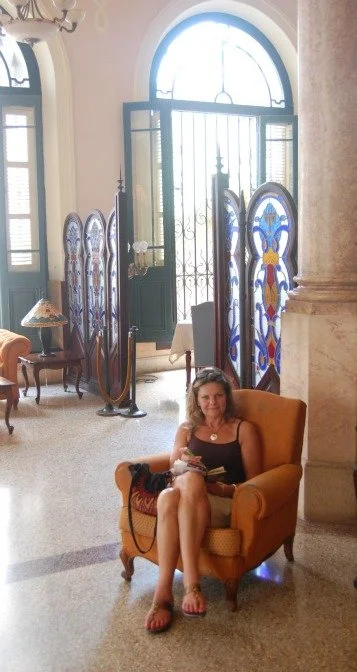
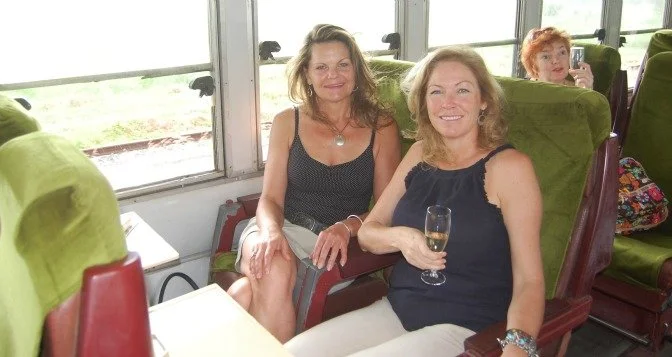
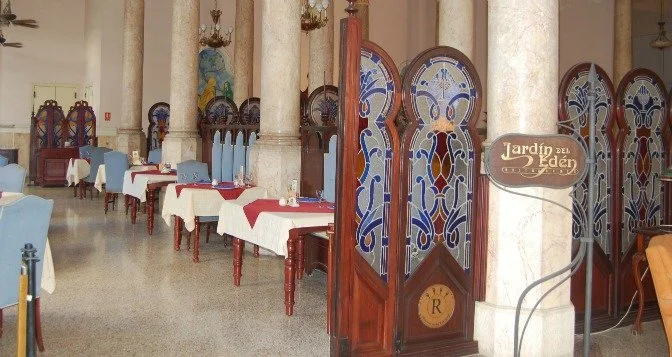
Note to self in lobby of Hotel Raquel, Havana – don’t wait too long to come back to Cuba – take the train to anywhere with Cindy … next stop Marrakech.